Philosophically, "Tsuki no Kokoro" (mind/spirit like the moon) is understood to mean a calm, clear mind not focused on any one thing - yet at the same time clearly aware of everthing taking place in the enviornment.
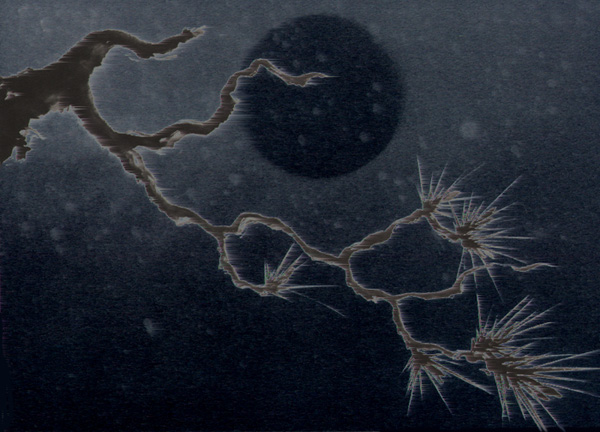
"The moon observes everything around it - from the heavens to the earth, but is not affected by its own illumination..."
For hundreds of years there has been a student / instructor relationship that has existed in which arts such as these have been studied - sometimes at great personal loss and pain, and passed down physically and verbally to the next generation of students.
It takes years of ongoing study to deeply understand any art or craft. This is especially true of the martial arts, but the rewards can be extraordinary.
The Tsuki Kage dojo was founded September 8th, 1997 at Loyola Marymount University. A log of dojo activities is maintained by the dojo Hisho (Secretary / Historian) in hopes of preserving a record of what will hopefully be a long and prosperous endeavor. It is interesting to note that evening practice at LMU would often occur outside on the grass, illuminated only by the moonlight. This is apparently the manner in which some well known masters like Otake Risuke (Chief Instructor, Tenshinsho-den Katori Shinto-ryu) learned kenjutsu.
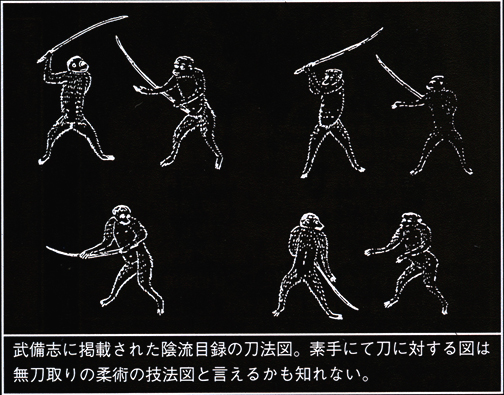 |
The name "Tsuki Kage" can be seen used in the technical curriculums of many koryu (classical traditions), referring to concepts such as vital point attacks in jujutsu, as well as postures, techniques and paired sparring forms found in various forms of kenjutsu. The kanji we use for "tsuki" translates as "moon", while "kage" translates as "shadow". The moon is considered a symbol of one's "enlightened true nature" in Buddhism. The term "tsuki" can also mean "thrust"; one of two basic attacks used in swordsmanship (cutting and thrusting) - a method which we have found is often neglected in sword training. Additionally, the "(Aisu) Kage-ryu" (different kanji) was one of the founding martial traditions during the feudal period of Japan, known especially for their skills in swordsmanship and proper discipline of the mind and spirit while under combative stress.
Some arts apply the principle of "moon shadow" functionally as a technique of applying a near simultaneous counter attack by "shadowing" the same technique as that of the attacker. The defender would become victorious either by using superior timing or superior placement and alignment to their opponent.
Obata Toshishiro Sensei, founder of Shinkendo, expresses his idea of tsuki kage as follows: "Sunlight shone against a tree produces a strong shadow, whereas moonlight shone against the same tree produces a far more subtle and deceptive shadow". Obata Kaiso relates this principle to one of his own sword techniques, which involves luring the opponent into an overhead cut from close quarters and then immediately wrapping around the attack with perfect timing to perform a counter-cut/control.
These are some of the meanings that influenced the choice of name and specific philosophy of this dojo. It is our commitment to provide an atmosphere that will be conducive to experiencing Budo to its fullest.
The goal of this dojo is:
There are only three fundamental requirements for acceptance as a student:
Following is a comprehensive list of guidelines and rules that reflect our dojo policies:
 |
